2026-03-21
Ohigan: Honoring Ancestors at the Equinox
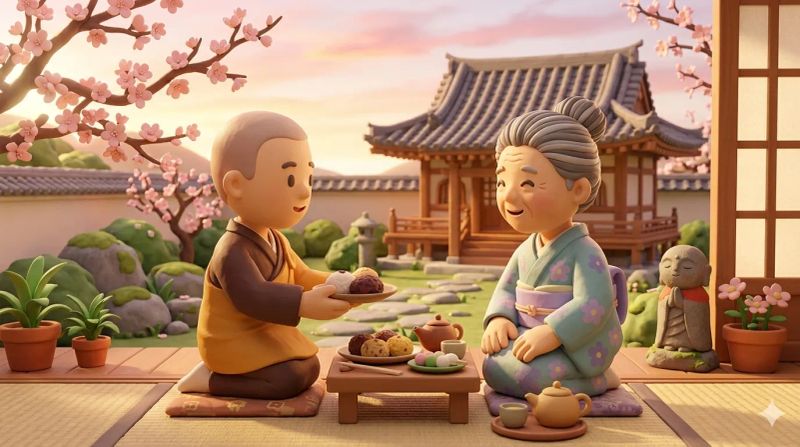
The sweet rice balls eaten during Ohigan are called 'botamochi' in spring, named after the peony (牡丹, botan), and 'ohagi' in autumn, named after the bush clover (萩, hagi).
Ohigan ni, kazoku to ohakamairi ni ikimasu. Soshite, botamochi o tabemasu.
During Ohigan, families visit graves. And, they eat botamochi.
Ohigan wa Shunbun no Hi o chūshin to shita kikan de, senzo o kuyō suru tame ni hakamairi o shitari, botamochi o osonae shitari suru Nihon no shūkan desu.
Ohigan is a period centered around the Vernal Equinox Day, and it's a Japanese custom to do things like visit graves and offer botamochi to honor one's ancestors.
Ohigan to iu meishō wa Bukkyō shisō ni yurai shi, shigan kara satori no kyōchi de aru higan e wataru koto o imi shimasu. Kono jiki ni kojin ni omoi o haseru no wa, senzo kuyō de aru to dōji ni, mizukara no ikikata o mitsumenaosu kichō na kikai to sarete imasu.
The name 'Ohigan' originates from Buddhist philosophy, signifying the crossing from this mortal shore (shigan) to the other shore of enlightenment (higan). Thinking of the deceased during this period is considered not only an act of ancestor veneration but also a valuable opportunity to reflect on one's own way of life.