2026-03-31
Text Like a Tokyo Teen: 2026 Slang
Japanese youth slang, or 'wakamono kotoba', changes incredibly fast. Many terms are created by shortening longer phrases or through playful sound changes, making them a fun but challenging part of modern communication.
Wakai hito wa 'emoi' to iu kotoba o tsukaimasu.
Young people use the word "emoi."
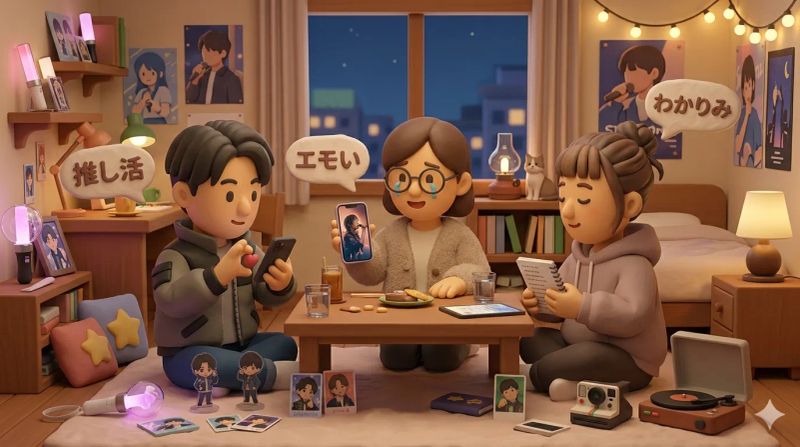
Saikin no wakamono no SNS de no kaiwa ni tsuite iku ni wa, 'oshikatsu' ya 'wakarimi' to itta surangu o rikai shite oku hitsuyō ga aru.
To keep up with recent conversations by young people on social media, it's necessary to understand slang such as "oshikatsu" and "wakarimi."
Zetto-sedai no surangu wa seisei to shōmetsu no saikuru ga kiwamete hayaku, issei o fūbi shita 'pien' no yō na kotoba de sura, matataku ma ni jidaiokure to kanjirarekanenai to iu genshō wa, gendai shakai no utsurikawari no hageshisa o nyojitsu ni monogatatte iru.
The phenomenon where Gen Z slang has an extremely fast cycle of creation and disappearance—where even a word like "pien" that once took the world by storm can be perceived as outdated in the blink of an eye—vividly illustrates the intensity of change in modern society.